Lucretia is Rome’s most famous rape victim. She is raped by the son of Rome’s last king – her suicide spurs her family into revolution and the monarchy is swept away. Lucretia’s story was celebrated in antiquity; the earliest surviving versions are by the Augustan writers Livy (early 20’s BC) and Ovid (AD 8). Her fame in Britain has declined with the decline of Classical education, but she still boasts a poem by Shakespeare and an opera by Benjamin Britten. And lots and lots of historical fine art, and it mostly looks like this.
In fact, this eighteenth century example is at the mild end of the genre. Lucretia’s beautiful face is not distorted by her death agony. Her eyes are raised pathetically in supplication. The pearls, symbols of purity, which adorn her lovely hair, hang on a broken string – her chastity is gone. In order to stab herself, she reveals a pleasing expanse of soft flesh, although not too much for modesty. The sword juxtaposes masculine violence with all this female softness. It makes a decorous wound with little blood. Although the prominence of her hand stresses her agency in her death, she seems otherwise gentle and helpless.
We can track these themes though other paintings, which are more or less shameless about presenting Lucretia as an object of sexual predation; the moral tale provides an excuse for gazing on her nakedness and savouring her reluctance. The viewer is supposedly sharing the view point of the witnesses of her death – her husband and father – but she is drawn more from the point of view of the rapist. Poor Lucretia’s rape entitles her to become an icon of titillating nudity for the rest of the history of European art. If western art were Instagram, there would be a law against it. In case you think I am overegging, this, we can look at some more Lucretia pictures.
Parmigianino’s 16th Century Lucretia looks like an ancestor picture for Tiepolo. We have the upturned eyes, and pathetic beauty, here combined with a killer hairstyle, and we have the determined sword hand. Lucretia has bared the whole of one soft breast and shoulder for the blow, and then absent-mindedly struck into the luscious fabric which shimmers over her other breast. No wound. No blood.
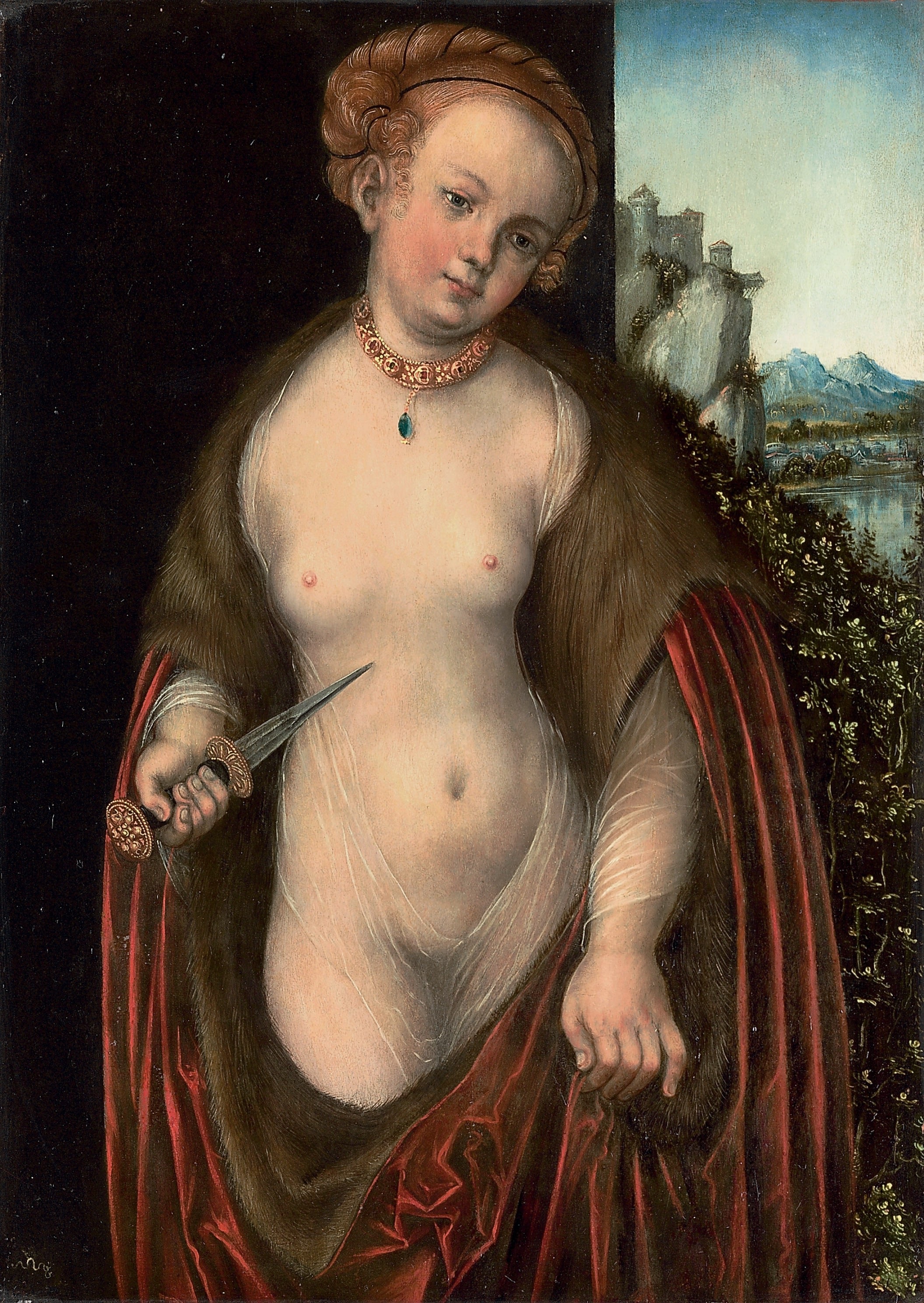
But why not take off all your clothes – like the Lucretias of Cranach the Elder and Durer and several other people.
This style of Lucretia bares all to the viewer. She has dressed bizarrely for the occasion, wearing a gossamer drape under a massive red velvet cape with fur trims. The whole point of the garment is to make a frame for her pearly flesh. The false modesty is staggering. The huge enveloping garment is tucked tightly behind both breasts, and the conceit of the fine drape makes a pretence that the viewer isn’t actually seeing Lucretia’s pubic hair. The dagger is being used as a pointer. Lucretia doesn’t seen much interested in her suicide, having enough to do with trying to control her robe with her left hand
Benson’s Lucretia has got herself dressed up and done her hair after the rape, but she has left her rich dress open down to the groin, showing off her breasts, navel and pubic area through the implausibly fine linen of her shift. The blade is again just an accessory. Meanwhile, in the background, we see her naked in bed, while one soldier proposes to get in with her, watched by another, watched by us. Voyeurism probably is the right word.
But why keep the actual rape in the background? Lucretia’s rape is complex – in our Roman key sources, Livy and Ovid, it is a rape by forced consent. This means, in the original story, that Lucretia complies with Tarquin’s demands for sex, and risks being accused of willing participation – a major factor in her suicide. Women’s groups have fought hard to make courts recognise rapes of this kind in recent history. A woman going uninjured to the police station would not have got far with a rape case in my living memory. Mostly women comply to avoid immediate violence – and this is Lucretia’s case, with additions. She is prepared to let Tarquin beat or kill her, but he also threatens to dishonour her whole family and disinherit her children by setting her death up to look as if she had been caught in adultery with a slave. This is a refinement of cruelty open to Tarquin because of specifically Roman circumstances, but it corresponds to modern parallels where threats to family members play a part in coercing victims.
None of this, however, is of any interest to our artists. It is much more exciting to see a naked woman grappling with a hairy soldier.
This Titian painting is the most well-known example of the focus on the rape. The naked woman is falling back beneath the highly clothed man. She raises her boneless arms in entirely futile protest. Luckily her bed sheets are only two foot wide, so we can see her entire body from toe to fingertips. Titian has made the mistake of misplacing her arm to partially shield her breasts, but we get a great expanse of tummy instead. And if we need the breasts to be there, we can try various other paintings including a lurid version from the circle of Jan Gossaert where Tarquin too gets his kit off, and where there is a snack on the bedside table for later. Somebody bought it in 2014 – I hope they don’t give it to me.
Next time I want to blog about the original meaning of the Roman story and some more sympathetic artists. Meanwhile, if you haven’t had enough of exploitation pics of Lucretia, you could visit the Royal Collection, which has many, many examples. I leave you with two. At Hampton Court Palace (Middle Closet) this Lucretia thinks she is a picador; she has decided to swirl a cape (which covers only her face) while wielding a dagger to unclear purpose. Apparently Charles I bought this picture.
It is very risky to talk about ‘witchcraft’ at all. It means so many different things to different people. Everything I write is based on things in my library and I going to look at a passage of Tacitus and use it to explore practices within Roman culture which later scholars call ‘witchcraft’. So don’t expect anything about Wiccanism, Satanism, coven witches and many other things commonly associated with the term ‘witchcraft’. I am going to write about the Roman belief that people could exercise power over others by indirect and non-rational means, which we would call ‘magical’. The Romans seem to have regarded this sort of practice as a common source of harm. In their literature, practitioners are always regarded as dangerous, but their criminal law legislated against particular ‘magical’ crimes, not being a ‘witch’. At the end of the post I will ask how appropriate the Anglo-Saxon term ‘witchcraft’ is.
Roman practitioners of these disapproved arts invoked gods and spirits, but in ways condemned by the community. Their behaviour was distinguished from the good and proper relations with the gods, which the Romans called religio or religion, although there was an overlap. The gods of the upper world were associated with light and life and had nothing to do with the pollution of death. Everyday petitionary prayers went to them. The dreaded underworld gods were associated with death, misery and darkness and their worship involved nocturnal rituals and the sacrifice of black animals and even the sacrifice of dogs – unclean for normal sacrifice. But all this was part of normal religion – the gods concerned with both light and dark deserved their dues.
We only enter the realm of evil when engagement with the underworld deities moves from the community propitiating them in the proper ways to individuals calling upon Hecate, Dis and infernal spirits secretly and harnessing their power to evil ends, especially towards causing sickness and death. The Roman sources tell of forbidden and polluting rites, carried out at night, and including the desecration of dead bodies. Practitioners were supposed to use harmful incantations. They also made potions and objects which gave them special powers, especially control over others. The sources have to be used with caution, but there is strong evidence that these practices did actually exist. Practitioners were not regarded as having an alternative religion – instead they had illicit commerce with the gods of the religion of the community.
The Latin word we usually translate as ‘witchcraft’ is maleficium – harm-doing, a word which could also be used of harm in general. Practitioners were malefici ( female maleficae = harm-doers). Rome’s oldest laws the Twelve Tables, exist only in fragments but seem to have included, with other crimes against persons and property, enchanting by an ‘evil song’ (malum carmen) and removing crops by enchantment, again by song (qui fruges excantassit). The references come from Table VIII 1b; 8a quoted in Pliny NH 28. 4). Later legislation follows the same pattern and specifies the banned ‘magical’ practices without distinction, alongside other forms of harm, such as arson and stabbing. The Romans did not call these practices ‘magic’. The Latin word magia from which we get ‘magic’ meant something also suspect, but different from maleficium, namely astrology. In legal texts, the key indicator that we are talking about ‘magical’ harm is usually the association of harm with singing in some way – particularly the malum cantum, the ‘evil song’. But this is misleading, as we shall see below. Mentioning ‘evil singing’ identifies the kind of harm that is going on, but Romans assumed that it would be accompanied by a other acts from a wide range of options, including, at the least, ritual activity while the song was sung.
Returning to Germanicus, this magical indirect harm-doing was strongly associated with an undoubted way of doing criminal harm at a distance – poisoning. A poison is definitely a potion which gives you control over others. The Romans did have a concept of poison (venenum) as separate from other malefica (‘magical’ harm-doing things), as the passage below shows, but in the absence of advanced chemistry, it made perfect sense to reinforce the drug with occult methods, which may have gone even into its preparation. It is not surprising that people adept in poisoning were expected to be adept in other forms of harm at a distance. Tacitus account of the death of Germanicus is good evidence of the inseparability of poisoning and maleficium in the Roman mind. It also shows the sort of harm-working things (malefica) which would accompany the evil song.
The first symptom of poisoning is, obviously, serious and sudden illness. In the ancient world allegations of poisoning almost invariably accompanied the sudden death of significant figures. Tacitus likes to cite evidence. Here he notes Germanicus’ own belief and the curiosity of Piso as circumstantial evidence. But he also cites as supporting evidence for Germanicus’ belief a bizarre array of nasty objects hidden in the house where Germanicus died. These, it seems, are the sort of things which may accompany a poisoning. Tacitus refers to these briefly, because they are well known (in popular belief) and even leaves some for the reader to supply. He calls the cursing objects collectively malefica – ‘harm-working things’. Tacitus’ lack of surprise and his assumption that the reader can supply the details of other horrors is extremely interesting – in his Roman mind these bizarre proceedings are a familiar modus operandi.
So what are the malefica? The human remains look like graveyard pilferings – a common accusation against ‘harm-workers’, and a serious assault on the safety of the dead. The cinders combined with gore (tabo) come specifically from the cremation grounds. Human remains were polluting in the Roman world. Prayers to the upper world gods could not be made in their presence, and so the objects must have compromised the religious safety of Germanicus’ household. There may also be an attempt to make Germanicus dead by bringing him into contact with the dead. Below, we shall see this in the case of a different spell. But it would not be irrational to suppose that polluting a house with human remains would also cause illness. The finding of the objects concealed in walls and floor is suggestive. Did Romans often look for malefica in case of sudden illness? Or did the objects leak and smell? Did someone know where to look for them? Were they meant to be found?
The Latin Tacitus uses for ‘incantations and spells’ is carmina et devotiones. We have met the malum carmen (plural carmina), the ‘evil song’ as the key ingredient of maleficium. Clearly there might be literal singing, but in this passage of Tacitus we see that writing charms down and placing them in contact with the victim was effective too. Writing was a powerful vehicle; you could harm your victim both by placing harmful words in your victim’s presence, and by capturing your victim’s name and using it in harmful ways. And of course, with this kind of access to the victim, harm-workers could support the carmina lavishly with other malefica, and help the spell along with physical means, like poison.
The reference to leaden cursing tablets, defixiones, can be supported from archaeology. We find cursing tablets deposited by people with grievances in sacred places – usually in water, but, of course, ones thrown into water are preserved best. The defixio, sometimes in backwards writing, encourages the deity of the shrine to punish the enemy. Seen by itself, placing defixiones in shrines could be no more than an emphatic form of negative prayer. It hardly required secret knowledge. The gods of the dead were not invoked over the affairs of the living – a transgressive feature of maleficium. There was, at face value, no malum carmen, although we cannot know what rituals may have accompanied the defixio. The physical tablet may only be part of the story, as it is in Tacitus.
Tacitus also mentions devotiones. The defixio above looks fairly typical. But it is different because of its content and its location – it was found in a graveyard and contains a special form of curse – the devotio – which offers possession of the victim to underworld spirits.. On the tablet Marcus Licinius Faustus consigns Rhodine and several other people to Dis, god of the underworld. Gifting power over the living to the gods of the dead is something more than a common defixio and it is noticeable that Tacitus makes a distinction.
In certain circumstances, a devotio could be a good thing. Livy (8.9) records the battlefield devotio of the consul Publius Decius Mus in 340 BC. Decius, according to Livy, sought the approval of the pontifex maximus, the highest religious authority, before dedicating himself and the enemy army to Earth and the underworld spirits. He then launced himself suicidally against enemy. He was rewarded with Roman victory and everlasting fame. But this was an open and self-sacrificing act for the benefit of the community at a place of slaughter, where the underworld spirits were already active.
Marcus Licinius Faustus’ act is the opposite – it is secret and selfish and involves desecrating a grave, presumably by night. Graveyard rituals and desecrations are strongly associated with maleficium and maleficae in the sources. It seems that Marcus Licinius Faustus has crossed the line. As in Germanicus’ case, he brings the victim, or at least her name, into contact with the dead: he writes [may she] have as much strength as the dead man who is buried here. It would be interesting to know whether he performed other graveyard rituals which leave no trace.
Tacitus’ account shows cursing tablets could be left in the victim’s home as well as in sacred places – something we would be unlikely to find out by archaeology. We are now developing a picture which suggests the Romans mentally expanded the ‘evil song’ of the Twelve Tables into a complex bundle of acts, including physical attacks on the victim’s home. Was placing cursing tablets in the house supposed to be magically effective, or were they primarily intended to signal to the victim that he was under occult attack ? They did in fact signal that an enemy had access to the house. Would curses against Germanicus also have been placed outside his home, in graves or shrines, or are we looking at variation in practice? Did Marcus Licinius Faustus try to invade Rhodine’s home as well as working his graveyard ritual?
How did all these malefica, ‘harm-working objects’, get into Germanicus’ house? The Roman slavery system made hostile infiltration fairly easy. The agents in other poisoning cases are said to be slaves controlled by the poisoner. Were the objects meant to be found? Certainly Tacitus claims Germanicus’ illness was increased by his terror. In this case, if Germanicus was poisoned, the rational and irrational methods of causing harm at a distance were worked together to produce greater harm than poisoning alone. So perhaps Roman maleficium was effective on a psychological level, as magic is said to be in many parts of the world even today. Tacitus claims the forms of malefica he describes were well known and, in Germanicus’ case, the practitioners were rewarded with practical results. His illness was increased by terror, and, as a bonus, he died in an agony of despair.
Why and how these bundles of actions produced their effects could not be resolved until there had been another thousand years of scientific development. So the Roman law makers were probably being pragmatic when they identified indirect harm-doing (maleficium) by the ‘evil song’, the malum carmen, as a crime. We are looking at a society where people in general including those with criminal intent believed in the power of ritual actions. Rituals and the ‘evil song’ were part of the toolkit for practical efforts to control and even kill others. And although the agent worked at a distance from the victim, we have seen that physical contamination of the victim’s home could be part of the method.
Well, what about ‘good witchcraft’? This doesn’t really exist as a concept when scholars talk about Rome, because what we are translating as ‘witchcraft’ is maleficium – ‘harm-doing’. Good-doing, by whatever means, including acceptable ritual practices and invocation of spirits, just wasn’t a problem. Songs, including sung charms are all called carmina in Latin. The only kind of carmen worth worrying about was the malum carmen, the ‘evil song’, which was dangerous and illegal. Such songs could cause death, although death wasn’t the only objective of the ‘evil song’. Love charms too could be reinforced with a drugs and ritual actions. The surviving literary examples – Theocritus Idyll 3 and Virgil’s Eclogue 8 – envisage the love charm as vengeful and coercive. The Twelve Tables mentions enchanting crops – clearly a big concern. This suggests a hinterland of persecuting vulnerable people for crop failure, but given our practical evidence for maleficium we have to tread carefully. Unless you believe in ‘magic’, it is hard to see how any form of spell could damage crops, but threatening or offering to do so could be criminally profitable. And, as we have seen, your spell might be helped along with physical action.
The Roman believed in other kinds of charms. In Apuleius’ Golden Ass, the hero accidentally transforms himself into a donkey. He has got hold of a powerful spell, belonging to a dangerous practitioner of spells, who is able to fly, but it is only harmful to him because he is an idiot – an ass, in fact. Benign singing and ritual directed at objectives like fertility and prosperity merged into religion. And benign making of ritual objects and potions for healing merged into medicine, which included non-rational elements at Rome. Sometimes it is hard to decide whether singing practices are ‘magical’ or not: is a lullaby a sleep charm?
You could say that ‘magical’ ways of doing things were integral to Roman culture. No public business could be done without examining the sky for signs. Omens could hold up battles, ritual mistakes could cause enterprises to be abandoned. There was no stable way of disentangling rational and irrational practices. There were particular harmful ‘magical’ practices which were distinguished and condemned, like harmful non-magical practices; to the Romans they were all just harmful practices. Roman ‘witchcraft’, or what we call Roman ‘witchcraft’, is, by definition, always antisocial.
So is ‘witchcraft’ the correct word? English speakers are stuck with it because of two thousand years of discourse about ‘magical’ practices, which led to whatever it is the Anglo-Saxons meant by ‘witchcraft’ being identified with a combined package consisting of what the Romans called maleficium and other practices which had come into official disrepute by the beginning of the modern era. These included benevolent charm and potion, which were increasingly excluded from legitimate medicine. It didn’t help that the Old Testament (Exodus 22.18) condemned ‘witches’ to death – or at least, it did once it was translated accessibly into English in the sixteenth century. Who exactly was condemned to death in the original Hebrew is hard to say – but the intended target may have included poisoners, something we can easily understand from the Germanicus story. There is an online article about this here.
The sixteenth and seventeenth centuries were an Information Age, as movable type and the Renaissance rediscovery of the Classics widened both the spheres of learning and the availability of books. Society was moving towards the twin system of science (the accepted rational) and religion (the accepted irrational) which is familiar today. This binary system excluded and marginalised all practices not sanctioned either by scholars or priests. Classical education only reinforced concerns about ‘witches’ with solid Roman authority and horrifying anecdote. Reports of cultural practices from a range of societies, and going back 2,000 years, gathered in libraries to form the basis of a pseudo-science of ‘witches’ with enthusiasts including James I of England. ‘Witchcraft’ came to be viewed as a single phenomenon stretching across time and place, with a set profile of inter-linked occult behaviours which now also included obedience to the Devil. Someone suspected of being a ‘witch’, on any ground, was likely be tortured into confessing other acts from the profile, like flying and devil worship, which as a ‘witch’ she (because women were most suspected) must surely commit. The seventeenth century became an age where women in England could be hanged, essentially, for having a cat.
‘Witchcraft’ charges have become notorious as a pretext for misogyny, religious persecution and various sorts of abusive and disempowering misbehaviour. We even have the phrase ‘witch hunt’ to denote meaningless persecution. Tacitus’ account of Germanicus’ death reminds us that in the pre-modern world, certain sorts of ‘magical’ practice were criminally intended, and were supported by forms of physical intimidation still criminal today. In the popular perception, and it seems, at least occasionally, in actual fact, these practices were linked to poisoning. They were associated with terror, physical harm and death. The death of Germanicus gives us an idea of what the ‘evil song’ might look in practice and why it was illegal in Roman law.
By the fourteenth century the donor of a religious painting or window had the recognised privilege of being added into the image as a humble suppliant. Initially the donors are smaller than scale and often outside the sacred space – the first of the congregation to adore, but with no pretence to join the object of adoration. The picture below is a good late fourteenth century example of the tiny donor.
Richard II, a King of notorious splendour, was an early adopter of a bolder style. In the Wilton Diptych he appears full size, kneeling at the foot of the saints who introduce him to the Court of the Madonna and Child. However, he maintains separation from the Court of Heaven by splitting the image between the two panels. The saints with Richard include his personal patron, John the Baptist and two previous Kings of England – Edward the Confessor and Edmund Martyr. The king at prayer in this world has powerful divine supporters who mediate for him with the Court of Heaven which he does not enter. This is theologically correct, but also makes a gesture towards the special sacredness of the King. The king is joined to the company of Heaven by his succession to the kingship, which he inherits from his sainted royal ancestors; the men who, by God’s will, have passed the royal mantle down to him. (Edward was, in fact, a relative of some sort, and why not Edmund too?)
But in the fourteenth century donors get bigger, and, although they still kneel piously, they move fully into the holy space. Sir John Donne of Kidwelly, sometime deputy governor of Calais, was not a King or even the despot of an Italian city state, but this is the painting he commissioned from Bruges in the late fourteenth century, featuring himself, his wife and a daughter.
Sir John Donne and his wife push Saints Catherine and Barbara into the background, and their full robes spill onto the carpet which defines the space allocated to the Madonna and Child. In fact the Holy Child is waving cheerfully in Sir John’s direction. The donors do not face the Madonna, or look sideways like many earlier and smaller donors. Instead they give the viewer the benefit of their true portraits.
Courtiers in real life, Sir John and his wife seem very much at home in the Court of Heaven. The Madonna wears the same type of oversized fur-lined robe as his wife. In token of her perpetual virginity, she has loose hair, but Saints Catherine and Barbara have courtly hairstyles and fasionable clothes. Saint Catherine wears the daring sideless surcote which shoes off the tight kirtle beneath. Saint Barbara’s sleeveless surcote shows off her rich under-sleeves. The Donne’s clothes are distinguished by less brilliant colour, but they are no less rich. Both husband and wife wear gold suns and roses with jewelled lion pendants specifically denoting their high tank under Edward IV, and probably given by him – the Court of Heaven is clearly Yorkist. They are nearer the Madonna than Sir John’s patron Saints, John the Baptist and John the Evangelist, who occupy the two wings of the triptych, now shown here.
The language of secular and spiritual power is one and the same. Those who are first on earth are most definitely not last in the Kingdom of Heaven – they are first there too. I find these paintings with integrated donors very hard to grasp at the spiritual level. Clearly, as a believer, Sir John imagines himself in the presence of Heaven when he prays, but does this personal spiritual sense of connection survive being transferred to public display? There something peculiar about worshipping yourself worshipping, let alone intruding your image into the prayers of others. Painting like this seem to stake the claims of secular lords to access to divine approval in a way which actually diminishes the separateness and holiness of the divine. Of course the Church of the period was a highly political place; what is striking is to see that secular power blazoning itself across religious icons, as if Adidas were to start sponsoring altars bearing their logo.
Part of the dissonance is, of course, the courtly fashions. It is no longer general practice to show holy figures in the clothes of the day. Ironically, decades of Christmas cards, have made us very accepting of showing divine figures in Renaissance clothing. On the one hand, there was no tradition in Western Europe of trying to reconstruct some sort of historical dress. But on the other, the fourteenth century shows a move from rich robes of fairly indefinite period to specific contemporary fashions. Pietro’s Madonna above, in the restrained style which originated with the copying and recopying of icons, is wrapped in a huge traditional veil which obscures any contemporary clothing features. In the Wilton diptych, the Kings have identifiable costume, but the Court of Heaven is distinguished by loose garments of overwhelming blue, except for the Christchild’s gold smock. I wonder how it affected the worshipper first to have the Saints become conscious of high fashion and then have the local gentry join them in their niches.
Sir John Donne’s confidence in divine approval was repaid. He was one of the Yorkist nobles who successfully retained favour in the Court of Henry Tudor, after the defeat of Richard III and his Yorkist forces in the Battle of Bosworth 1485. He and his wife are buried at St George’s Chapel, Windsor. His sons went onto found English dynasties – the Earls of Oxford, Burlington and Cumbria and the Dukes of Devonshire claim descent. His career is a reminder of how the Tudor dynasty began the marginalisation of the Welsh lands, as many great lords became satellites of the increasingly centralised English Court. Kidwelly itself has the ruins of its Norman castle to testify that it was once the stronghold of a powerful and wealthy dynast.
In this way, Kidwelly and other Welsh castle towns became forgotten by-waters, which now seem to have been gifted with ruins merely to increase the sense of the picturesque. Sir John Donne, knighted on Tewkesbury Field, a great lord of his time, with the might of Kidwelly behind him. Who would have thought it?
One last note on Sir John – in the picture both his wife and the Virgin have open books. It is quite novel to have the Madonna try to dandle the Christchild and read at the same time, though not unique. In fact, Sir John was also a commissioner of prayerbooks. Two are in the British Library and you can find out more about the third, now in Louvain, here. Wearing his armour, Sir John prays (rubric) to his good angel. The prayer begins ‘O angelic guardian.’ In the beautiful gilded border, under Sir John’s armorial bearings, a peasant cuts grapes. The creeping vines are heavy laden but infested with snakes. These could be an allegory of the devil, against whom Christ’s blood, consumed as wine in the Mass, is the sovereign remedy. Or they could be Lancastrians in the Yorkist vineyard. In any case, a guardian angel is evidently an important ally.
In 399 BC the Athenian philosopher, Socrates, drank hemlock and died. He was 70 years old. There is a full account of his death by his pupil Plato, apparently based on the eye-witness testimony of close friends, as Plato himself was not there. Socrates had been condemned to death, and according to Plato, died serenely after a long discussion with his faithful male friends and students on the immortality of the soul. This account can be found at the end of Plato’s Phaedo.
Is the account literally true? Well, Plato almost certainly created the dialogue on immortality. Socrates wrote nothing in his life. Plato spent his life recreating discussions with Socrates – imagining discussions with Socrates was Plato’s way of doing philosophy. So we can’t always be sure he is recording things Socrates actually said. But the final section is different. It is an eye-witness account of how Socrates actually died.
The picture above is a famous representation of the death of Socrates. You can find an excellent article on it at the Metropolitan Museum of Art, New York, where it now hangs: just click here. I’m not going to discuss this painting, especially as someone else has done it so well. I’m more interested in why death-bed paintings were a popular genre up until the twentieth century. The idea was not to take a ghoulish pleasure in death but to draw inspiration from people who ‘died well.’ Subjects tended to be people who sacrificed their life in a noble cause, or people who set an example of how to live so as to die without fear or regret. Socrates ticks both boxes.
Death-bed scenes moved completely out of fashion in the twentieth century, as the so-called ‘first world’ moved death out of homes and into hospitals. The care of the dying and the clothing of their bodies for burial became a professional job. Far from families and whole communities gathering at the death bed, it became increasingly hard for them to be present. In a society where most people can spend years without coming into contact with a significant death, and will perhaps never see a dead body, many people are uncomfortable with the topic of death. Social approval has moved towards ‘remembering how they were when they were alive.’ Remembering how they died can be seen as unhealthy and even disrespectful; at the very least it is something private and personal. Medical attendants have replaced family at the bedside, protecting the dying person from being disturbed by grieving relatives.
People in the ancient world rarely got a chance to die privately. In Ancient Greece the women of the household usually cared for the sick and prepared the body for the tomb – along with any other local women who came to help. No-one could be unfamiliar with death, especially as life expectancy was fairly low, and a death-bed was somewhere for friends and family to gather. It was essential for loved ones to be there to kiss and embrace the dying person in farewell, even catching the last breath in their mouths. And a member of the family was needed to close the eyes and place a coin in his mouth to pay for his passage across the river Styx into the land of the dead. There was noise too, as pans were shaken to ward off evil spirits. Death was a big event.
Deaths in battle were also frequent and obviously public. Thinking about the soldier will help us understand the ancient way of thinking. A solider had to live bravely and die bravely – a man’s whole moral character was in question if he faltered at the end. Such a man was a risk to his comrades In the ancient Greek world, there were no professional national armies. All free men were expected to fight from their late teens. The idea of living so that you can die well, without fear or regret, was an obvious concern for everybody. It was bad enough for a man to fall in battle – what could be done with someone who deserted his friends and neighbours, or was too terrified to fight?
Socrates thought the Athenians should take seriously the idea of living so that you can die well, whether you died in battle or not. On the battlefield, it is easy to know what to do – stand your ground and fight. The question is, what is it you have to do off the battlefield? This was Socrates’ area of expertise. For him, the key was knowing what was truly good. People mess up their lives by fearing the wrong things, like death and poverty, and wasting their efforts chasing things they imagine are good. This is why people need to examine their beliefs and test them. As long as people believe a hotch-potch of things which don’t connect to reality, it is not surprising that they are going to make terrible decisions.
So the first thing is to make people question their beliefs to see whether they make any sense. The aim is not to keep questioning for ever. The questioning has two purposes. First of all, you need to clear out all the wrong ideas which clutter up your head and make you incompetent at running your life. Secondly, you need to ask questions which will help you discover what the universe is really like, and how you fit into it. This includes discovering what is good, and worth wanting, and bad, and worth fearing.
Knowing what is good isn’t easy. But if you find out, the battle is won. Because Socrates, or at least Socrates according to Plato, believes that virtue is knowledge. ‘Virtue’ to Socrates means something like ‘excellence at being a person’. We have the idea that you could be virtuous but unhappy. Socrates doesn’t. Being excellent at being a person is the happiest thing you can do; the alternative is being rubbish at being a person, and obviously if you are rubbish at being a person you will be unhappy. Once you understand your real nature, you can be excellent at being a person and then of course you will be happy. When you are dysfunctional, and fighting your true nature, of course you are unhappy.
The key is that the perishable universe is mostly a distraction. You are essentially your soul, an immortal being. You will flourish once you direct your being towards immortal things, like Beauty, Truth and Goodness; these are real, and give the physical world what stability it has. The physical world allows you glimpses of reality. Wherever you perceive pattern, regularity and beauty, you have an opportunity to move your mind away from the physical clutter of the world of sensation, and begin the journey of pure thought into the real world of things which are eternal, which Plato calls the Forms. Basically, you should do maths, and hang out with mathematicians in your free time.
But because you have a body, you may have some hardware problems. Your soul is immortal, but it is wearing a perishable body. It’s possible your soul has got a bit battered through descending into a perishable body. One problem is that getting born takes away the soul’s memory about its life outside the body. In addition, the body places constraints on the soul. The body has to be nourished and protected, and the part of the soul programmed to look after it is glitchy. Unless you really nurture the highest part of your soul, the bit that is most really you, then your physical desires, which are only intended to keep your body functional, will start taking over. You will become obsessed with the things the body craves, like food and drink, and lose track of the things that your true self needs. This causes unvirtuous – non-excellent – behaviour and unhappiness.
So the cure is to nurture the highest part of your soul. Bring it into contact with the order of the universe by studying maths. And discuss goodness and truth. Question what you thought you knew. Throw out the rubbish ideas and your soul can start remembering Truth and Goodness and Beauty. Once you remember those things, the material things you once desired will seem unimportant to you. You only desired them because you were confused. Your soul was longing for beauty, so you collected beautiful things which reminded you a bit of Beauty itself. Your soul was longing for goodness, and it got distracted by things which are ‘good’ for the body, like food. Once you rediscover Goodness itself, you will never crave those trivial things again. And you won’t fear losing them either, because your soul will possess them all the time.
Death, it turns out, is a fairly irrelevant part in the soul’s journey, where it sheds a body it has been wearing for not very long. The upside is that the soul will be free from all the ways in which the body limits the soul and keeps it away from Goodness, Truth and Beauty. There isn’t really a downside. This is what the characters in the Phaedo discuss. The conversation leads up to the moment where Socrates proves that it is possible for a human being to live in the way he has described, by going unafraid into death. His companions grieve, and he tells them off – he has sent the women away, because he knows they will do all the grieving behaviour that women always do. He has chosen to spend his last moments in his body, as he had lived, contemplating the goodness of the universe with his friends before he leaves for a fuller life, where they will eventually join him. Why would they spoil this beautiful event with weeping and wailing?
This is why, in the picture by David, Socrates is vigorously teaching on his bed. He looks strong and active, because his soul is strong and active. The cup contains the hemlock, which he will drain without fear, regretting only that he isn’t allowed to make a drink offering from it to the gods. The jailer weeps, as Plato says he did. According to Plato, Socrates died peacefully. Some commentators object that death from hemlock is not pleasant or peaceful, but Plato does not say that Socrates suffered no physical pain. In fact he records that Socrates suffered slow paralysis, and that he covered his face as he waited, only uncovering for a moment to remind his friends to make an offering to Aesclepius, god of healing, in thanks for an easy death.
Many people have found Socrates’ death inspiring. The important thing isn’t that he was a martyr for his beliefs – although he was condemned for refusing to renounce his teachings. It isn’t even that he was brave, although heroic death scenes often do celebrate military values, such as the painting of the death of Epaminondas, painted also in the French neo-Classical style, just seven years after David’s painting.
Epaminondas is definitely dead. the viewer gets to share in the wonder and the sorrow, but where he has gone, and whether it was all worth it is up to the viewer. This is a secular painting and celebrates patriotism, fame and glory as noble life goals.
Many death-bed scenes involve famous last words. The tradition was that the dying person would make a last act of guidance to the people left behind, even just a few consoling words to the family. Epaminondas said, ‘I have lived long enough, for I have died unconquered.’ Socrates actual last words, about the sacrifice to Asclepius are relatively trivial. But for Plato, they show how little the prospect of death occupied Socrates mind. Socrates ‘real’ last words are the whole of the dialogue, the Phaedo, which culminates in and explains his complete indifference to death.
Nobody ever painted pictures of Socrates dead body. He says in the Phaedo, when asked about his funeral
“I cannot persuade Crito, my friends, that the Socrates who is now conversing and arranging the details of his argument is really I; he thinks I am the one whom he will presently see as a corpse.”
After this, anyone painting Socrates dead would look a bit silly. Socrates doesn’t really have a death-bed, since he refuses to accept death as change to anything important. It is only his companions who have the uncomfortable illusion that he has died, because the body he used to wear becomes empty. Socrates is teaching them that we are not our bodies and nothing of what they love about their friend is changing. Plato was not there at the time Socrates died. Apparently he was ill, but in Socrates’ case, there wasn’t anything exceptional for him to be there for, although it was a shame he missed the party. Socrates’ death was particularly unreal for Plato, who would continue to converse with him in dialogues for the rest of his life.
High Baroque is not my favourite style of painting, but Poussin is an intriguing artist, not to say strange, and in this story painting he celebrates (if that is the word) one of the strangest episodes in Tacitus’ Annals, the death of Augustus’ designated heir Germanicus. So today I am spending time with this painting. I can’t get to Minneapolis, but there is a magnify button on the linked web page which we can all enjoy.
So we are in the French Baroque period – although Poussin mainly worked in Rome. The Renaissance rediscovery of Classical art and literature has transformed art and architecture. The Church remains a great artistic patron, but secular art is thriving, including portraiture and historical paintings. As the educated elite define themselves by immersion in the culture and achievements of the Classical world, scenes from Roman literature are popular. Where earlier artists set historical scenes in the dress of their own day, there is now a gesture towards historically accurate costumes and settings. But this does not mean realism. Baroque style is mostly concerned with creating a rich visual environment, full of Classical details heaped together with improbable draperies and exaggerated gesture. The Classical past in Baroque art is more dramatic, more colourful, more grandiose than any real world could be. It is, in Umberto Eco’s term, hyper-real.
We are in Syria in AD 19. Germanicus is dying. He was grandnephew of the Emperor Augustus and husband of his granddaughter Agrippina 1. Before his death in 14 AD, Augustus had intended Germanicus to be his ultimate heir, but allowed power to pass first to Tiberius, Germanicus’ uncle. Now Tiberius is Emperor. Our source is Tacitus, Annals II 69-73.
The Baroque Classicism is worth looking at. Germanicus has found a large architecturally Roman hall to die in. Poussin has stripped out the painted plaster which usually adorned Roman palaces. This is a convention of the style, and partially reflects Renaissance ignorance of Roman use of colour; ruins were stripped back to bare stone and marble, and it was not obvious that there had been paint and plaster. But the bare stone floor adds to the generally grim effect, which is probably intentional. This is not so much a room in a Roman palace as a bleak and empty corridor of power literally imagined. A blue curtain is being rigged up (a figure on the left is still holding it) to make a corner for Germanicus’ bed, which is the only furniture, and which looks like a draped catafalque more than anything else.
Germanicus, apparently already wearing his shroud, is dying in maximum discomfort, in a bright spot created by the white bed linen, or grave linen, as it soon will be. The glitter of his eye gives a disturbing sense of his agonised awareness. The left of the painting is dominated by a crowd of male figures, his military escort, in a combination of Roman armour and epic undress. They hold spears, and in one case a legionary standard. One brandishes a sword for no apparent reason, but probably to swear in oath of vengeance. Some mourn, head on hands, others gesticulate, one points aloft, presumably to indicate where Germanicus is bound, unless he has seen something on the ceiling. These are hardly ideal deathbed companions – or rather they are ‘ideal’ and not real. They represent the emotions of Germanicus’ loyal army.
On the other side, clustered in a more naturalistic fashion are the grieving family. Agrippina 1 is seated. The other members of the family are less well defined. The naked boy is the future Emperor Caligula. Is that Germanicus’ seal by his foot? This boy will inherit Germanicus’ place in the succession, after the killing of his brothers, and will be, according to Tacitus, one of Rome’s most murderous emperors, sadistic, controlling and probably insane. This will be the child’s inheritance. At the bedside his nakedness is not just part of the heroic style, but denotes his innocence. Even so he holds a rich drape, prophesying his imperial future, across his shoulders.
The rest of the family is more vaguely outlined. The woman with partially undraped breast is a nurse, and the baby, if anyone in particular, will be Agrippina’s youngest child Julia Livilla. The older mourning boy is one of two other sons and two daughters are missing. The family in grief is carefully stylised – Germanicus is mourned as a public figure on the left and as a husband and father on the right.
Deathbeds are not a cheerful subject. This one is particularly rich in the imagery of shock, despair and impotent rage. Here is why.
Tacitus takes the view that Tiberius saw Germanicus as a threat to his own unpopular rule and to the ambitions of his own son, whom Augustus excluded from the succession. He reports the extraordinary stories of the circumstances of Germanicus’ death – and the general belief that he was the victim of an attack by a combination of witchcraft and poisoning – a usual combination at Rome.
The cruel virulence of the disease was intensified by the patient’s belief that Piso had given him poison; and it is a fact that explorations in the floor and walls brought to light the remains of human bodies, spells, curses, leaden tablets engraved with the name Germanicus, charred and blood-smeared ashes, and others of the implements of witchcraft by which it is believed the living soul can be devoted to the powers of the grave.
Germanicus, it is said, believed as he died that he had been poisoned by his subordinate, Piso. The idea is that the poison and the witchcraft have been carried out on his orders. But behind Piso stands Tiberius. We are invited to accept Piso as Tiberius’ agent.
Tacitus has Germanicus accuse Piso in his dying words. And he commends his six children and wife to the people of Rome, reminding them that Agrippina is Augustus’ granddaughter. Poussin’s Germanicus points to his family with his dying hand. He goes on to relate that Germanicus was buried without proper imperial honours – the effect of a plague death in a hot climate or deliberate imperial neglect? Tacitus composed Germanicus’ speech with knowledge of the fate of Germanicus family. Agrippina and Germanicus’ two elder sons would suffer lethal persecution by Tiberius. All of the children in the end died violently, although they would be perpetrators as well as victims in the vicious struggle for imperial power.
As a murder painting, it is interesting to compare Poussin’s picture with Botticelli’s portraits of Giuliano de’ Medici. There is the same sense of untimeliness and expropriation, but in Poussin’s painting the emotions are heightened by Germanicus’ dying rage at his betrayal and helplessness, reflected in the response of his soldiers, who have all the bravery in the world and no-one to fight. Even without Tacitus’ text, the painting has a compelling character, but it is meant to be ‘read’ by viewers who cut their teeth on the text in the schoolroom.
Poussin has put the emotions of the text into visual form. And he has refused to be distracted by the most sensational part of the story – the witchcraft allegations. I can’t find a single reference to these in the painting. For Poussin these would only detract from the true story of nobility tormented. But even though Poussin is not prepared to be distracted by the sensational details, they will be the basis of a follow-up post here.
Many years before I had a chance to go anywhere virtually, I spent some real life time in Bergamo, with Italian friends. This was my first experience of Italy, and I was lucky enough to be completely unprepared for the cultural shock. Bergamo has a beautiful historic centre with many astonishing buildings, and, unassumingly tucked away, one of the world’s great Art Galleries, the Academia Carrara.
I memorised some of my favourite portraits including Bellini’s Madonna and Child with Pear. But today I am going to share an image I actively disliked, but which drew me with the kind of magnetic quality which makes children keep creeping up to something nasty to see if it is still as horrible as it was the first time round. In fact, last week I visited it again: I was back in the Academia Carrara and it is hard to miss. So here it is.
The Medici family need no explanation – the fifteenth century was the time of their rise to power in Florence. Giuliano co-ruled with his brother Lorenzo the Magnificent. In the picture, which is a very standard portrait bust, he is plainly but richly dressed. His profile is accentuated by the pale square behind it. He has fashionably curled very dark hair, which suggests youth and beauty, and here is a sign of immaculate grooming. Then we come to the face.
Male portraits of this period have a strong bias towards what we call branding – recognition and respect are more important than prettiness. Giuliano carries his chin high and looks, as he was, a distinguished man of about twenty-five. His distinctive family features are too narrow for the ancient Greek aesthetic; he has a thin face with regular features, a sharp nose, thin lips, and a strong cleft chin. His eyes are down cast, half-hidden under the lids, his lips are pressed lightly together. He is oblivious of the viewer, perhaps thinking of some serious subject with calm deliberation. He is also, as it happens, dead.
Giuliano was killed in 1478 in a botched conspiracy to dislodge the Medicis from power. This is one of several portraits made posthumously by Botticelli. Botticelli had painted him living, but some people think this set of portraits show characteristics which come from the use of a death mask – the half-closed eyes, the sunken colourless cheeks and prominence of the nose.
In fact Giuliano looks a good deal healthier in another image from not much earlier. Here there is a fullness in the face and an alertness about the eyes which balanced the sharp nose. The contrast is very striking. In fact we know he was a robust young man who enjoyed sports.
But whether the picture represents a death mask or not, we are also to understand that he is dead from another key feature of the picture – the empty window square. In North Italian painting of the period, it was common to place subjects in front of open doors or windows. The view in the background contributed to the meaning and atmosphere of the picture, and might contain local landscapes or significant scenes. Guiliano’s window contains nothing except strong central light, which illuminates each side of the window equally. He has no portion in this world anymore, so his lands and his aspirations cannot appear in the window. He is not, however in heaven. This is a human portrait not an imagined apotheosis. Giuliano, with his immaculate hair and rich modern clothing is suddenly and totally dispossessed. No wonder he looks pensive.
There is a version now in Berlin, which is very similar to the Bergamo one, but the memento mori aspect is even more marked in this version in the National Gallery of Art, Washington.
Here Botticelli has added extra symbols of liminality and death. The window now has two shutters, one open and one closed. This marks a point of transition, as Giuliano, captured in paint, is poised everlastingly between life and death. We are now separated from Giuliano by a sill where a bird perches on a dead twig. The bird is often an emblem of mortality, and the flight of the soul. Here it is a dove, emblem of fidelity, perhaps to the widowed bride, or the family he represented. The dead twig, broken off its living tree, is an emblem of premature death. The sill itself makes no sense in real space. Similar sills often separate us from the divine in paintings of the period, as in Bellini’s Madonna and Child with Pear in the same gallery.
Here a highly artificial screen behind the Madonna and Child separates them from the scenes of Italian life, over which they nonetheless reign. Close in front of them a balustrade separates the viewer from the holy figures, like the altar rail which seals off the holiest ritual area of a liturgical church. The balustrade forms a sill where the symbolic object is a piece of fruit – emblem of swift decay. The painter has also stuck his tag in the centre of it.
The same principles are used in the Washington portrait is the same. The sill in this case separates the dead from the living and is ornamented with symbols of death. But Giuliano is not wholly gone or the frame would be empty. The viewer is holding Giuliano between the two worlds, between life and death. This isn’t eternal life through art, it is more like eternal non-death.
This is a truly secular Renaissance painting, rooted in Classical not Mediaeval culture, and in the Court not the Church. There is nothing Christian about this painting – no fears of Judgement or hopes of Heaven. We have a young and powerful man in the midst of a rich life, about to be married, in fact, suddenly and horribly expelled from his world and offered instead what appears to be nothingness. Botticelli uses these portraits to confront human questions about death, which go far beyond the mere fear of dying. How can our selves, our whole private universe, depend for existence on a body that gives in to 19 stab wounds in a church in Florence. How can a person suddenly not be? How does it feel to have your enemies force you out of life? Can there be justice for that? Is this all there is? How do you construct a life which is not dominated by the fear of losing it?
If you think this is a lot for Botticelli to infuse into this painting, then it is worth knowing that the conspirators had misjudged crowd feeling in Florence. With the encouragement of Lorenzo, the people hunted out and exterminated them and their associates Few made it to formal execution. Numerous people – maybe a hundred – met humiliating and agonising ends. Botticelli was commissioned to paint images of the condemned as hanging corpses on the outside of the Bargello, the public building concerned with administration of justice. He had a lot of time to reflect on the wreck of human lives.
As for the influence of Classical philosophy, this was central to the whole Medici Court. which patronised many artists and scholars, including the Neoplatonist Marsilio Ficino. The Platonic tradition fostered very different beliefs about the soul and its immortality than those of the prevailing Catholic orthodoxy. For a start, Platonists thought reincarnation as a human or animal was a possibility. But, more importantly, the soul is on a journey. It is indeed immortal, and survives death, but its goal is to escape the imprisonment of matter. Our conduct in this life determines whether our next existence will be more or less bound by matter – whether we will be philosophers or pigs, or whether we will escape having a material body altogether. Christian orthodoxy is more sympathetic to the body – Christians hope for a new Resurrection body, without the defects of the old. This allows for the idea that the individual will continue as a recognisable individual into everlasting life. But Platonic after life, stripped of the body is more complicated. Souls which achieve the happiest outcome will return to the One, the source of all life, free from the taint of a material body. But in what sense will we still exist as individuals? The whole point of the One, is that it is whole, complete, and not divided. Will my soul take my individual consciousness there? Is this life even ‘my’ life – I may have been a cat, or Plato in a previous existence; after death ‘I’ may have more incarnations. Who am I, once the body is removed? Giuliano’s soul has clearly left his body. Where is he now?
Posting about the Great Cameo, and its impossible image of stability within the Augustan succession, brought to mind this other impossible dynastic image. The Hampton Court portrait of Henry VIII with his family represents the Tudor monarch as the head of a successful nuclear family. He sits in the centre in majestic bulk, flanked by a younger edition of himself, and his dear wife. The daughters, older, but by English law always lower than sons in the line of succession, stand dutifully one on each side.
This picture may have been commissioned by Henry about 1545 for his Royal Palace of Whitehall, but it now hangs suitable enough in the Haunted Gallery of Hampton Court Palace. The Royal Collection has an interesting page about it. Its function was to project Henry’s vision of his own stable family, for his own satisfaction and presumably to impress state visitors. And yet the scene it represents is very misleading.
We start with the middle. The whole painting glows with gold, but this section is extraordinarily rich, and surrounds the King with priceless objects proclaiming his royal lineage and power.
Behind and above him is a black velvet canopy embroidered all over in gold thread. It bears his initials and royal arms. his feet are supported by a matching cushion placed on top of a rich carpet. He himself wears cloth of gold and gold embroidered red. His huge padded sleeves increase his breadth, turning his bulk into power and suggesting the huge shoulders of the athlete he had been in his youth.
On his left, at a lower level, but close under his arm, sits his beloved wife Jane, the mother of his son. She is demure, but arrayed in cloth of gold and ermine. Henry’s right hand rests on the shoulder of his son, Edward, who stands, as is appropriate in the presence of his royal father, but is gathered affectionately under his father’s arm and behind his knee. His stance, features and costume (minus the gold) suggest that he is in every way his father’s son. This closely gathered trio present a united front to the world – the males confront the viewer in full face, the Queen modestly tilts her head inwards to avoid the direct gaze. Beneath their feet stretches an exquisite carpet.
Edward was born in 1537 to Henry’s third wife Jane Seymour who barely survived the Christening. His age in the picture is one of the clues to its date, which is towards the end of Henry’s reign, conventionally 1545. As the mother of the Prince and heir, Jane is is Henry’s eternal Queen in the picture, but she was long dead when it was painted. She had never lived to sit by her husband while their son stood at his right hand. And Henry had not kept her place vacant. There had been Anne of Cleves (divorced) and Catherine Howard (executed). In legend, Catherine’s screams for mercy haunt the Gallery where the portrait now hangs. And finally, Henry married Catherine Parr, who was to survive him. She, not Jane, was his Queen in 1545.
Standing on ornate tiles, not carpet, and separated from the central group by a colonnade, stand the two dutiful older daughters, Mary on Henry’s right, Elizabeth on his left. They are dressed almost identically, but their height is used to indicate their age. If this is 1545 Elizabeth is 12, and Mary 29. The artist has smoothed out the age discrepancy and emphasised their physical resemblance. They are not here as individuals, but as the royal daughters, included as a matter of course in the courtly scene. But there was nothing matter of course about how they got there.
Just as the Great Cameo celebrated some development in the Augustan Succession, perhaps Tiberius adoption of Germanicus’ sons, or Claudius’ marriage to Agrippina, so this portrait puts into living form Henry’s Third Succession Act of 1543. His son by Jane is his principal heir. Then in order of age come his daughters, Mary and Elizabeth. Given usual rules of succession in the period, this looks like a very standard arrangement, but there was nothing standard about it in this case.
The Third Succession Act replaced two earlier acts; the Succession Acts of 1533 and 1536. The First Succession Act of 1533 followed Henry’s annulment of the marriage to first wife Catherine of Aragon, his conversion of the national religion to Protestantism, and his marriage to Anne Boleyn. In this Act, Henry repudiated Mary, the only surviving child of the marriage to Catherine of Aragon, as a bastard and disinherited her, in favour of the new born Elizabeth, his child by Anne. Mary was demoted from Princess to Lady, and spent three years attached to the court of her baby half-sister and separated from her mother who died in 1536.
But Catherine of Aragon wasn’t the only royal consort to die in 1536. Anne Boleyn’s reign was over and, accused among other things of adultery and witchcraft, she was beheaded. Now the Second Succession Act bastardised and disinherited Elizabeth too. Henry had no named successor until his third marriage produced Edward in 1537. At this point, Henry still hoped for more male heirs, but in 1543 he restored the girls to the line of succession. Whatever he had said about them, he privately accepted that that were his biological daughters.
So finally this Tudor family were united in an image which dismissed all the unsatisfactory marriages and focused on Henry’s relations to his three children. This was the next stage of the dynasty.
But, like Augustus, Henry’s manipulation of the succession had already produced the roots of serious complications. Edward was too young to reign when his father died in 1547, and he was very ill, possibly with a congenital disease inherited from his father. He did not live to marry. Edward’s reign was dominated by his advisers, and characterised by Protestant religious intolerance. It was a dangerous time for Mary and Elizabeth. When he died in 1553, there was a brief Civil War between the supporters of Mary and the supporters of Jane Grey. Why?
Mary, who had suffered so much at the time of the divorce, had clung to her Catholic faith. This gave a Protestant faction the opportunity to try to replace her with a Protestant cousin, Jane Grey. Mary triumphed easily, and set about replacing the intolerant Protestantism with intolerant Catholicism. Her religion and her odd status as the King’s bastard had kept her unmarried – Henry should have learned from Augustus to focus on the grandchildren. Now she married the King of Spain, Philip II, and hoped desperately for an heir. The prospect of Philip’s son adding England to the Spanish Empire, and importing the Spanish Inquisition caused unrest in England. Fearing a repeat of the Jane Grey rebellion, Philip urged Mary to execute Elizabeth if she would not convert, and Elizabeth ended up in the Tower of London.
Mary’s death without heirs in 1558 brought Elizabeth to the throne. But her early life experiences may be responsible for her lifetime refusal to marry. She had seen her mother executed, and then Catherine Howard, who had been a kind stepmother. The legend is that, as Catherine fell, Elizabeth, aged 8, declared to her cousin Robert Dudley that she would never marry. In Edward’s reign, living under the protection of the dowager Queen Catherine Parr, the teenage Elizabeth was compromised by the advances of her stepfather, Thomas Seymour, who exploited his access to try to involve her in an affair, and, with luck, eventually a marriage. His ambitions cost him his life and endangered Elizabeth’s. Later, Elizabeth saw her half-sister Mary finally gain the throne only to give in to domination by Philip of Spain, who roused up her subjects against her and neglected her in private life. In her adult life, she had ample opportunity of observing her cousin Mary Queen of Scots, lose her child and her kingdom through her marital disasters. Elizabeth was not prepared to share power, even for the sake of producing an heir. The Tudor dynasty died with her.
There is confusion about the date of this carved sardonyx jewel, about a foot in diameter, which now resides in the Bibliotheque Nationale in Paris. The Cameo commemorates the unity of the Julio-Claudian dynasty. On all interpretations, Augustus in heaven watches over Tiberius, who, under the wise guidance of his mother, the Augusta, is surrounded by the stalwart men and women of the family who will carry the dynasty on. This was the public face of the Augustan succession. And it had a job to do – reinforcing the obvious reality of Rome’s power with the belief that it radiated from a divinely appointed stable imperial household.
From the time of Augustus, the provincial peoples worshipped the Emperor and, over time, more and more of his deified relatives. The Cameo presents his lineage in heroic style. The jewel has 3 levels. At the top is heaven, where dead Julio-Claudians reside. Roman heaven is only for gods: starting with Julius Caesar, Augustus’ father by daoption, the dead Julio-Claudians become gods on death. The reclining figure with veiled head and rod of office is always taken to be Augustus himself, at the head of his dynasty.
IN the middle are members of the dynasty. This is where opinion begins to conflict. I see these as people who were alive when the jewel was made, following the theory that it was made in AD 23, to celebrate Tiberius’ adoption of his nephews Nero and Drusus as heirs following the death of his own son. Another theory is that the Emperor Claudius had it made. On either theory, the jewel tells an open story of unity and strength, which covers up a tale of violence, instability and cruelty.
What we see in the middle ground is a group of strong men and noble women, in heroic pose around a commanding throned man and his female consort. The clothing generally suggests the loose draperies of an earlier age, and that the men of warrior age wear armour. Strong eyelines connect the figures with each other and the heavenly scene.
Most interpretations agree that the throned man is the Emperor Tiberius, who ruled from 14-37 AD. The throned woman is not his wife but his mother, the dowager Empress, known as the Augusta. Under the throne sits a defeated Parthian, reminder of Tiberius’ role in recovering the Roman standards lost at the battle of Carrhae (53 BC) . These returned to Rome after negotiation in 20 BC, but both Augustus and Tiberius presented their recovery as evidence of massive military victory.
Under the imperial feet, at the bottom of the Cameo, the images of captives and subjects, use the language of violence openly. The Romans were traditionally a warrior society, and celebrated their power over lesser peoples. For centuries, triumphant generals had literally paraded captives in the streets. In diverting Romans away from Civil War, Augustus used the tactic of reinforcing traditional military values and promoting foreign war instead. So the artist’s decision to use images of abased subjects is not subversive; it is a traditional part of Roman self-glorification. The humility of the subjects is contrasted with the glory of the rulers, the imperial house.
The identification of other figures is more tenuous and varies depending on the date ascribed to the Cameo. Everyone agrees that they are Julio-Claudians, especially members of the family of Germanicus, and however you swap them around, the Cameo tells the same story of public grandeur concealing private dysfunction.
Augustus lacked a son, the male heir he craved to keep his dynasty in power. At one point he took his daughter’s sons as heirs, but they died before him. He then looked at various options for the succession involving marrying descendants of his sister and his only daughter, to create a bloodline. He came to view his great-nephew Germanicus as the next dynastic head. Germanicus married Augustus’ granddaughter Agrippina 1 to produce great-grandchildren multiply descended from Augustus and his sister. These children were Augustus’ best hope for taking the dynasty forward.
There was a snag in the shape of Augustus’ step-son, Tiberius, Germanicus’ wicked uncle. Tiberius was a significant commander, and an earlier plan had been for him to head the next generation, married to Augustus’ daughter, Julia 1. This marriage had been a disaster, and led to the strangest possible compromise. When the grandchildren died, Augustus adopted Tiberius as his heir AND made Tiberius adopt Germanicus as his heir above his own only son. The idea was that Tiberius should be a caretaker emperor, and pass power back into Augustus’ biological family, by handing power over to Germanicus at the right time.
When Augustus died in AD 14, Tiberius took over and restored his own son to the succession. But when this son died in AD 23, Tiberius returned to Augustus’ plan. Germanicus too was already dead, murdered in very grisly circumstances, so, according to Roman custom Tiberius adopted of Germanicus’ sons, Nero and Drusus. However, their closeness to the throne was to cost both these young men and their mother their lives. Germanicus had already paid this price, undoubtedly murdered, at the behest of someone very high up in the court – perhaps even Livia, the dowager Empress.
Returning to the jewel, around Augustus in heaven are some dead heirs. If we are in AD 23 and Drusus has just died, he may be the warrior ascending to heaven on Pegasus. The other figure is probably Germanicus. No-one is quite sure but we need to choose two from this short-list; Drusus son of Tiberius, Germanicus, and Germanicus’ father, Drusus, brother of Tiberius. In front of these figures is a man in a tunic, who may represent Aeneas, founder of the Julian family. Heaven consists of Augustus and, probably, the two dead heirs of his adopted son, Tiberius.
We move to the living in the middle row, which, on this version, contains the Emperor and his newly adopted sons and heirs. Tiberius and Livia are central. In front of him and behind him stand two young warriors, the sons of Germanicus, whom he has just adopted. We’ll assume the elder son, Nero (not the Emperor) is standing in front of him. Portioning out the girls is more controversial. The woman with the laurel wreath may be Germanicus’ wife, Agrippina, the granddaughter of Augustus (hence the wreath). The little boy may be Germanicus’ youngest son Gaius, known as Caligula. This all sounds very neat, but it doesn’t account for all three of his three daughters. The woman on the far right is often identified as Germanicus’ daughter Agrippina 2, wife of the Emperor Claudius.
Without worrying about the details, we can use the Cameo to look at the carnage the Augustan succession caused in the imperial family.
Germanicus, a resident of heaven, was undoubtedly poisoned on campaign in 17 BC. To be more precise he was undoubtedly attacked by witchcraft – in Rome, poison and cursing magic went together. His wife, Augustus’ granddaughter, whom I identify as the wreathed woman proudly supporting her son on the Cameo, would be put to death by Tiberius. So would the two elder sons, the new heirs. So far, that is four figures dead by unnatural means.
But Drusus, winging his way to heaven, was also said to have been poisoned – by his wife, Germanicus’ sister. We could count her death too, as she was later put to death for conspiring against Tiberius, but she isn’t on the Cameo. So the official Cameo unnatural death toll is 5 and counting.
The boy, Caligula, would survive to be Emperor – and to be assassinated. That makes 6. His three sisters lasted his reign. One of them, Agrippina 2, became the wife of her uncle, her father’s brother, the Emperor Claudius. The other two survived Caligula’s reign to be put to death by their uncle, their father’s brother, the Emperor Claudius. Agrippina 2 went on to be assassinated by her own son. So whichever they are, the Cameo unnatural death toll rises to 8 – everyone except Tiberius and Livia from the middle panel met sticky ends.
Even if you try some new identities for the figures, the death toll does not improve much. If one of the heavenly figures is Tiberius’ brother, Drusus, it improves a bit, as he fell off his horse on campaign. In the version where Claudius makes the jewel for Agrippina 2, he and Agrippina are said to be the figures behind the throne. Emperor Claudius was supposedly poisoned by his wife and she Agrippina 2 was assassinated by her son, so no improvement there. On this reading the little boy on the left may become a young version of Agrippina 2’s son, the future Emperor Nero, who was dethroned and committed suicide to avoid execution. If we make the woman holding the boy an allegorical figure, such as Providentia, goddess of Providence, then at least she is immortal.
All this only scrapes the surface of unnatural and suspect deaths in the imperial family, let alone the acrimonious marriages and divorces and punishments without trial. If the Cameo was made by Claudius, the Cameo shows Tiberius with people he had openly had killed. I find this a major problem with the later date. If the date is 23 AD, the irony is accessible only to later viewers; Tiberius’ strong household consists of people he was to kill and with others who would kill and be killed because of their claims on the Augustan succession. Whichever members of the family you place around him, you still get a litany of violent death. How can something so exquisite be so grim?
If you liked this post, you may like the post on the Hampton Court Portrait of Henry VIII and his family.
At this point in the Otia Imperialia Gervase is reporting stories of bodies of water punishing people for inappropriate behaviour. Gervase accepts this as a scientific phenomenon because he doesn’t have the resources to enable him to evaluate his sources. Tales about malicious water bodies could not be ignored, as they often reflected genuine nautical hazards, personalised as dangerous spirits or monsters.
The story of Haveringmere comes from the Welsh Marches – Banks and Binns list Newton Mere, Shropshire and Hanmer, Clwyd as candidates. It is nothing to do with Havering in London. The place name is of standard Saxon form, meaning the people (ing) belonging to Haefer. Mere means a lake. Unless the Northern Marches had some really dangerous local weather, the story may reflect a surviving pagan belief in local water spirits.
Gervase writes, in mixed Latin and Middle English:
Also in the same region is Haveringemere, and if anyone crossing it shouts out ‘Phrut Haveringemere and alle tho the over the fere’ he is immediately caught up in a sudden storm and sinks with his boat.
Gervase could clearly speak Middle English, and, since this is a local tale, we presume he had connections with the area. The modern English is ‘Phrut Haveringemere and all that travel on you.’ ‘Phrut’ may be an actual expletive or represent a rude noise, like raspberry blowing. Gervase goes on to say that it is extraordinary that a lake should take offence in this way.
The North Marches has several large bodies of water, including Ellesmere, which is rich in its own lore. The whole area is called ‘the Meres’. While not exactly the Lake District, the area is extremely beautiful, and I understand that it is ideal for walking holidays.
Dealing with travellers’ tales like this, I always find the question ‘WHY?’ interesting. Why did this story get into circulation? Why did people take it seriously? A story like this could be anecdotal. If a boatman is hurling abuse at a lake, he may already be under some stress and very possibly drunk, which might explain him sinking in bad weather. But this kind of explaining away may miss the point completely. Perhaps there is or was a local weather phenomenon which made the mere surprisingly treacherous. Perhaps the story is based on a strong local pagan tradition about that particular mere spirit and is therefore serious evidence for pagan survival. Perhaps the whole thing started as a joke, and is just evidence for how difficult it was for Gervase to get reliable sources. It is certainly evidence for how complex and inexplicable the Mediaeval environment could seem, even to educated observers.
In the interests of science, I am looking for a kayaker or coracler to make the experiment. There are two main questions to answer; do any of the meres respond, and if so, which one? We need to know.
Dedicated to Meg T who introduced me to Gervase and all his best stories.
This post is only an introduction to the good stories, which will follow in other posts.
Sometime at the end of the twelfth century, one Gervase, an Anglo-Norman, possibly from Tilbury, went to Bologna to study canon law, and from there to a career as jurist and administrator in England, Sicily and France. At some point he made time for his own mission to educate, inform and entertain, aimed in particular at the Holy Roman Emperor, Otto IV. The large resulting book is the Otia Imperialia (Leisure Reading for an Emperor). The copy I am using is edited and translated by S. E. Banks and J.W. Binns for the Oxford Medieval Texts series For copyright reasons, I shall use my translation , but for obvious reasons, it will be not unlike that in the edition. And so I add this disclaimer: quod apud illustrissimos Banks et Binns optime legendum est, hoc loco minore arte Anglice redditum expono, ut in reti quoque narrationes Gervasii abundent.
Leisure is not something you would readily associate with Otto IV, who spent a great deal of time battling for his throne, and ultimately losing it. But in case he had spare time, Gervase provided him with three volumes. Book I chronicles the world from creation to the time of Noah. Book II continues the history up to the Norman kings of England. And Book III, on marvels of the world is where the best stories are, many of them based on Gervase’s travels.
The history of travellers’ tales in European literature is long and fascinating. Homer’s Odyssey might be a good place to start. Herodotus is the obvious next main stop on the line – the man who gave us the sheep with such fat tails that they have to pull them around in little carts. The important thing about travellers’ tales is that they have to be believed to be true information about the real world. And, apart from being really entertaining, they are seriously interesting in many ways. It isn’t that they ‘have a grain of truth in them.’ Some of them do, others are absolutely true, although often oddly expressed, others are utterly insane.
Here, for example, not from Gervase, but from bestiaries throughout the Middle Ages, and going back at least to Hierocles the Stoic in the 2nd century AD is the self-castrating beaver. There already is a blog about this entertaining critter here.
I may come back to the beaver, whose non-existent behaviour proves many things about God and the universe. But for now my heart is with Gervase and the search for knowledge in a very unreliable world.
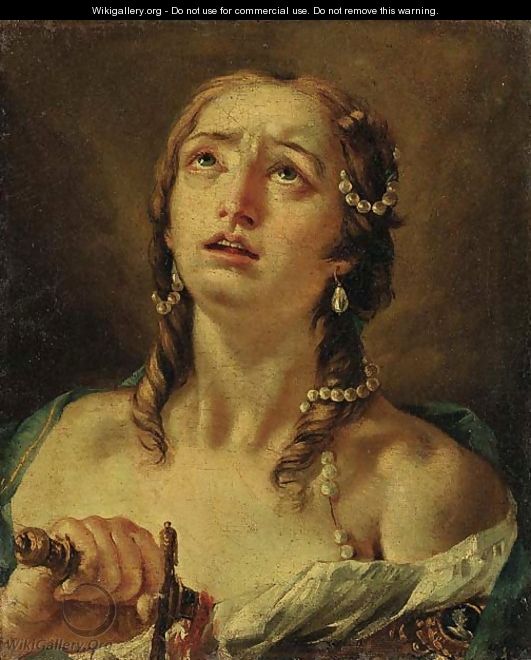
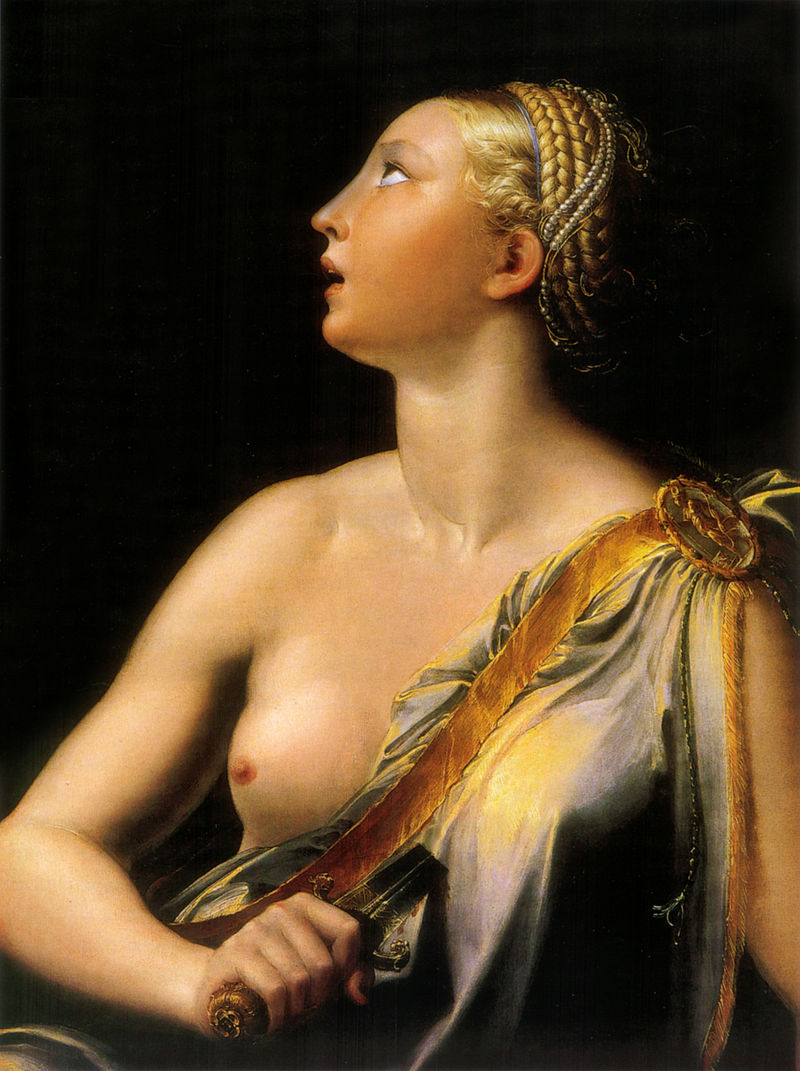

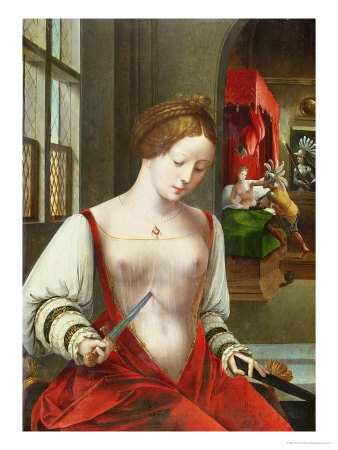
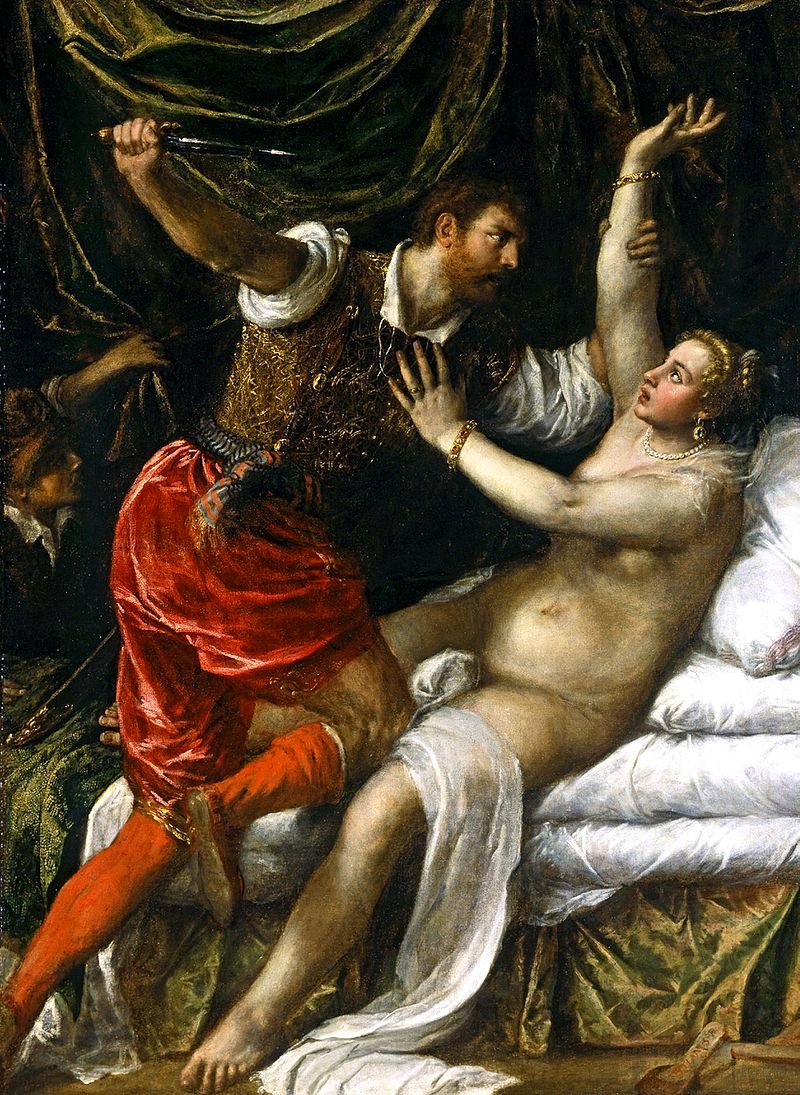
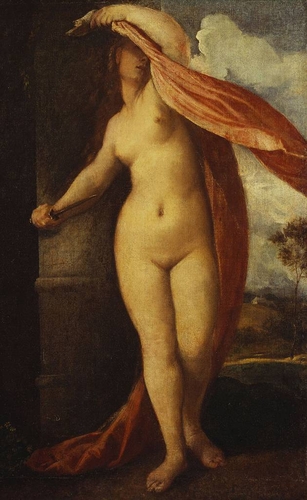
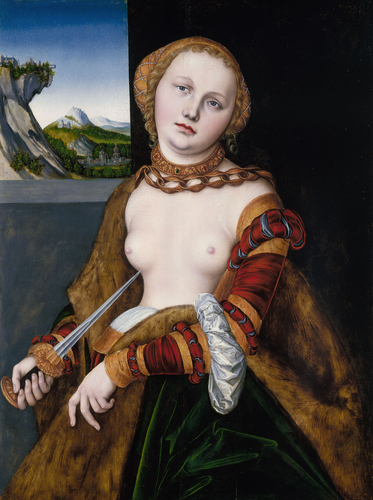
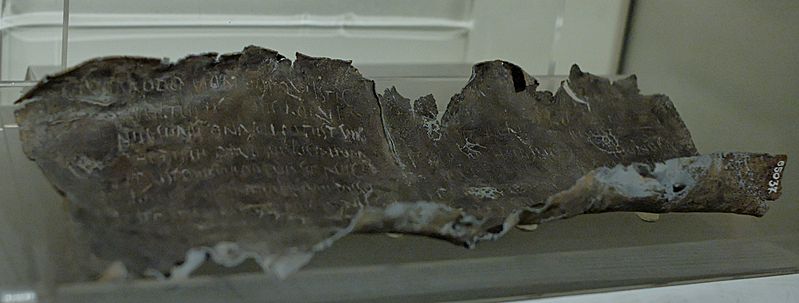

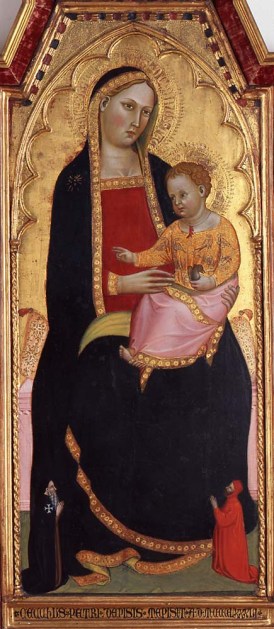
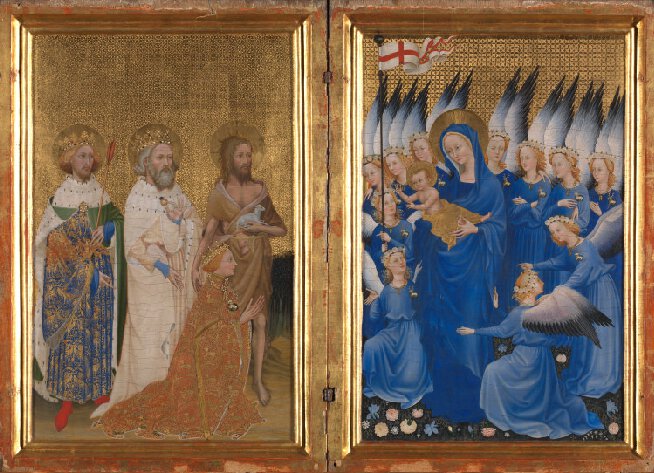
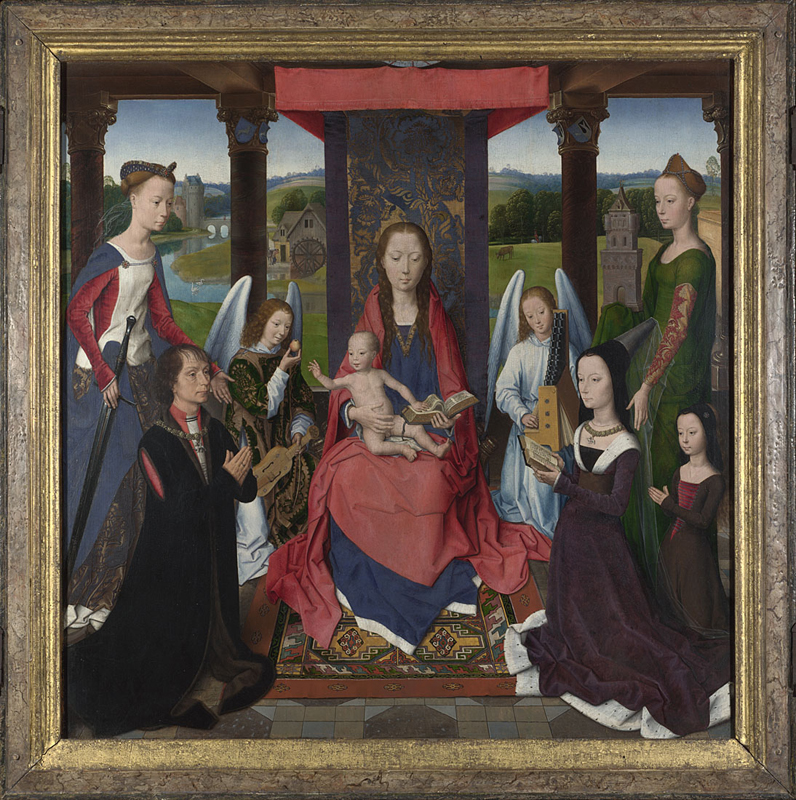

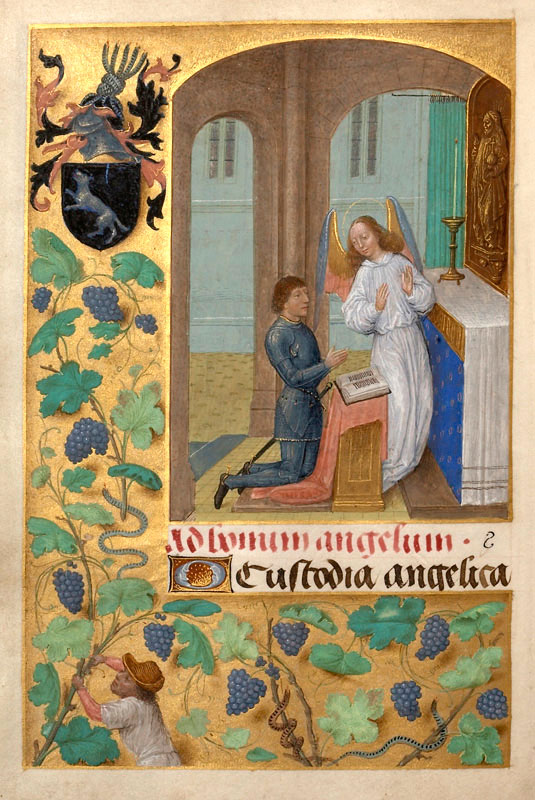
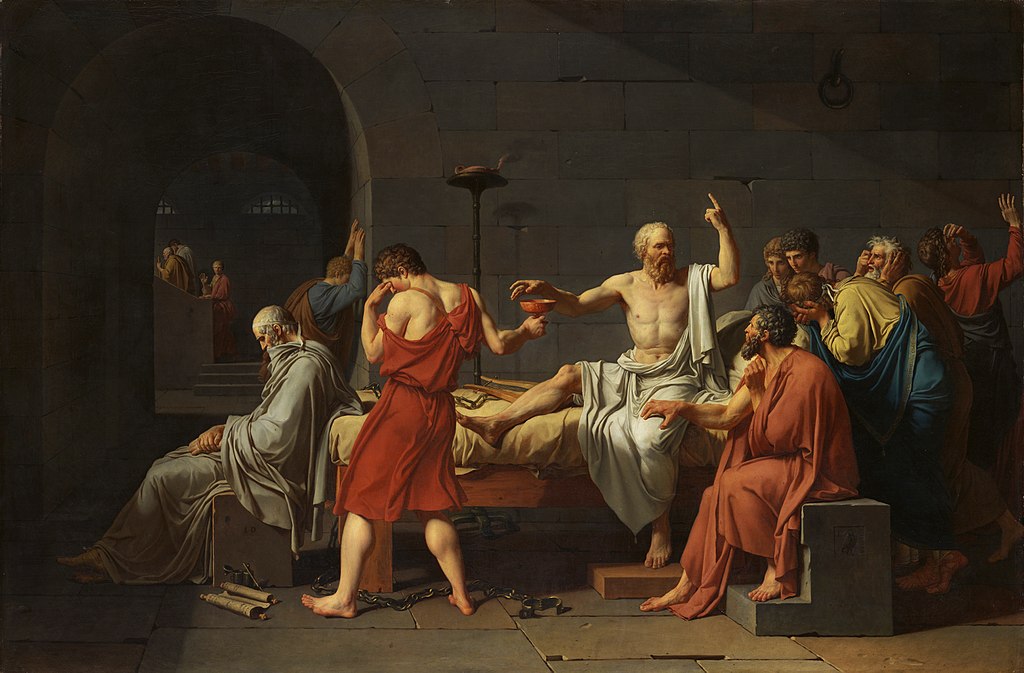

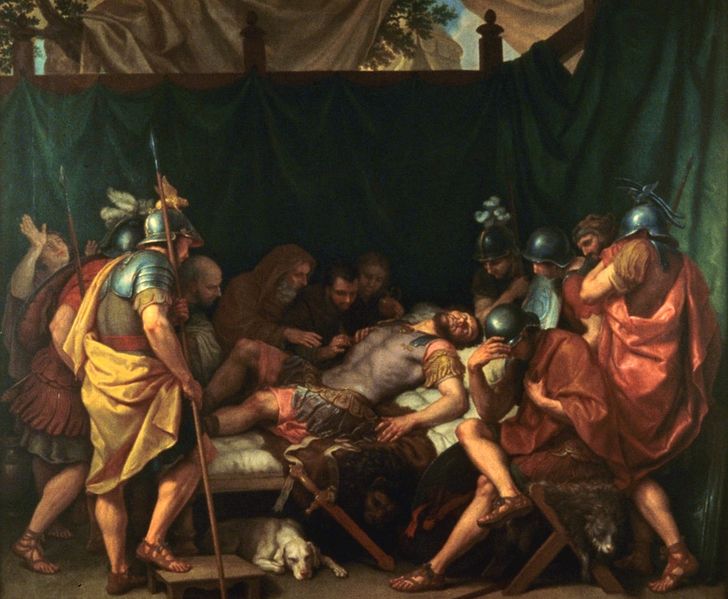
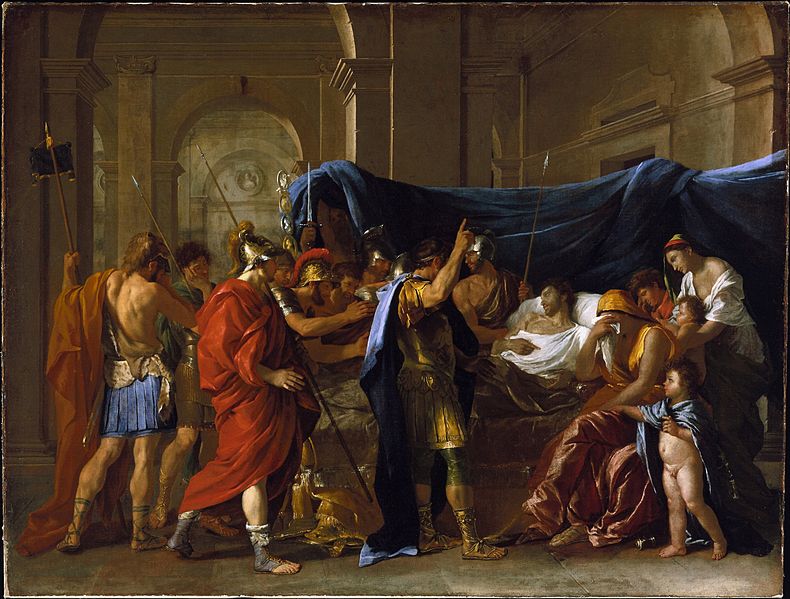
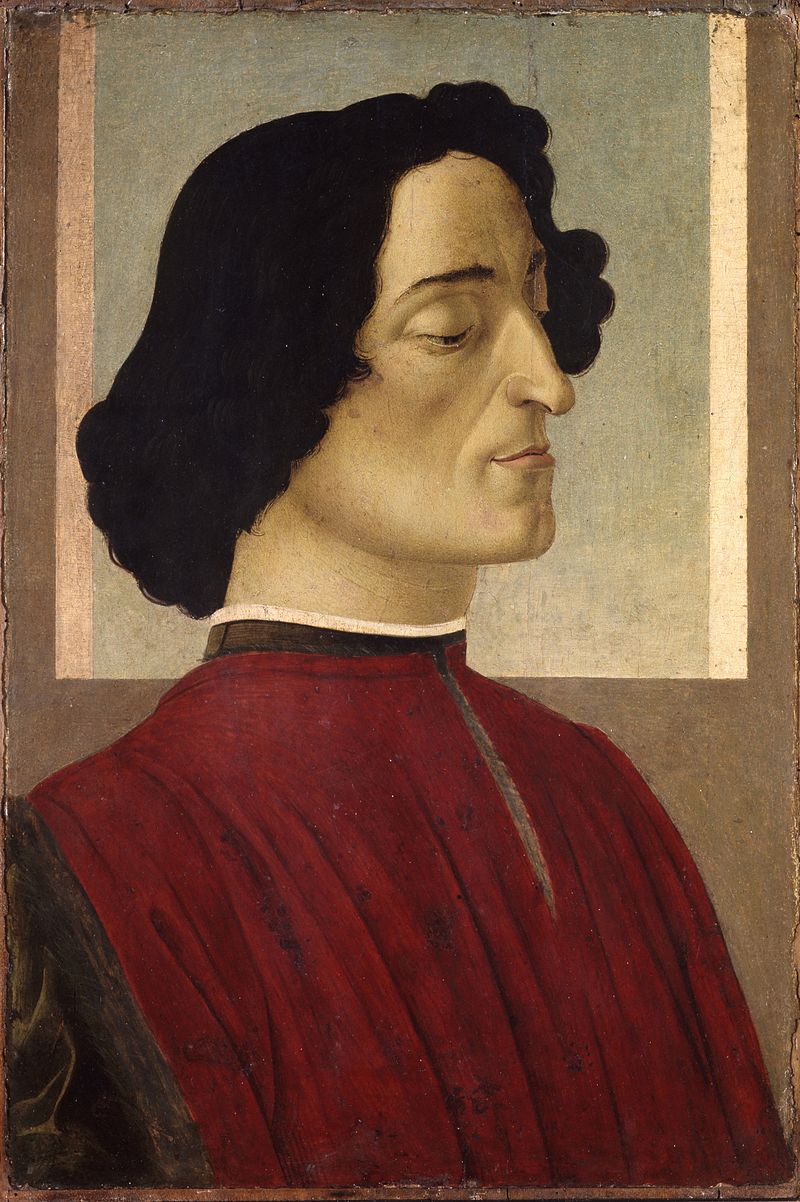

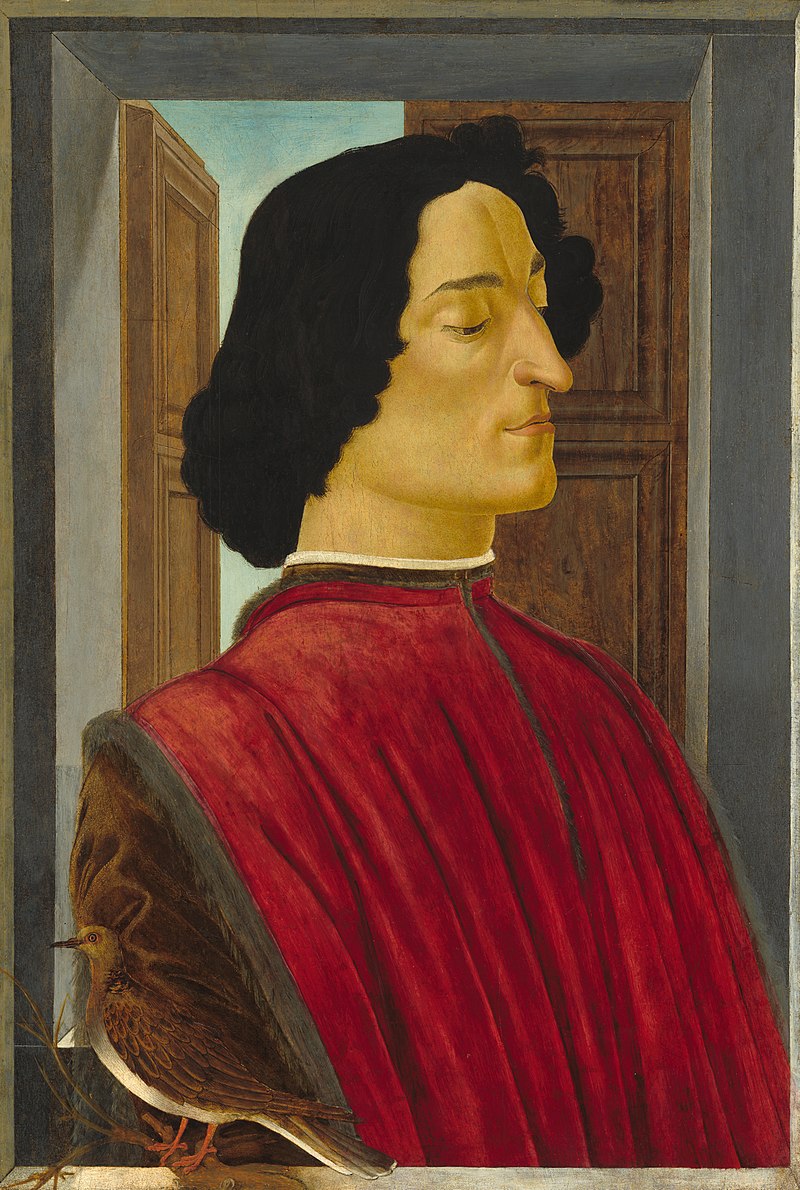
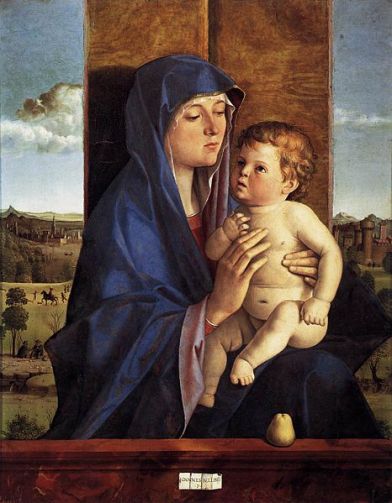


 Living in my Library